Core Faculty
-
 Ruth Zisman, DirectorSenior Lecturer in Philosophy; Director, Philosophy
Office: Aspinwall 207
845-758-7555 | [email protected]
Ruth Zisman, Director
Senior Lecturer in Philosophy; Director, Philosophy
Office: Aspinwall 207
845-758-7555 | [email protected]
Ruth Zisman teaches courses in Continental Philosophy and Political Philosophy, with a specific focus on 19th and 20th century German philosophy (Marx, Nietzsche, Freud), Existentialism, Psychoanalysis, and Feminist Philosophy. With a background in German Studies, Ruth works closely on the intersections of Philosophy and Literature and often incorporates literary texts (from Greek tragedy to Goethe, Rilke, Kafka, Shakespeare, Emerson, and Woolf) in her philosophy courses. Her primary teaching objective is to introduce undergraduate students to the joys and struggles of the philosophical pursuit - of reading great (but difficult!) books in a world that has stopped reading, of thinking for themselves in a world that has made not-thinking all too easy, of debating passionately and respectfully with their peers in a world fractured by ideological divides - and to cultivate in them not only a profound sense of curiosity in the world but also the drive to question it and the courage to change it. As Marx famously said: "The philosophers have only interpreted the world in various ways; the point is to change it." Ruth holds a BA in Literature from Vassar College, an MA in Humanities and Social Thought from New York University, and a PhD in German studies from NYU. At Bard since 2004. -
 Tez Clark
Tez Clark
Tez Clark works primarily in epistemology (including the epistemology of inquiry and formal epistemology) and metaethics, and has additional research and teaching interests in the ethics of belief, moral psychology, philosophy of language, the nature of agency, and metasemantics.
She received a PhD in Philosophy from New York University, an M.Phil. in History and Philosophy of Science from the University of Cambridge, and an A.B. in Philosophy from Harvard University. -

Jay R Elliott
B.A., New York University; Ph.D., University of Chicago. Recipient, Andrew W. Mellon Postdoctoral Fellowship in the Humanities, Yale University. Has previously taught at Yale, The New School for Social Research, and Iona College. His first book, Character, was published by Bloomsbury Press in 2017. His articles and reviews have been published in many leading journals, including Ancient Philosophy, Augustinian Studies, The British Journal for the History of Philosophy, Film and Philosophy,and Philosophy and Literature. He is coeditor, with James Conant, of the Norton Anthology of Western Philosophy, After Kant: The Analytic Tradition. He is also a consulting editor of Diogenes Laertius: Lives of the Eminent Philosophers, which is forthcoming from Oxford University Press. At Bard since 2013. -
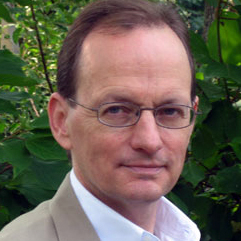 James H. Ottaway Jr. Professor of Aesthetics and Philosophy
Office: Aspinwall 110
845-758-7270 | [email protected]
Garry L. Hagberg
James H. Ottaway Jr. Professor of Aesthetics and Philosophy
Office: Aspinwall 110
845-758-7270 | [email protected]
B.A., M.A., Ph.D., University of Oregon. Postdoctoral research, Cambridge University. Author, Art as Language: Wittgenstein, Meaning, and Aesthetic Theory and Meaning and Interpretation: Wittgenstein, Henry James, and Literary Knowledge; contributions to Historical Reflections, Henry James Review, Philosophy, Journal of Aesthetics and Art Criticism, Journal of Aesthetic Education, Mind, New Novel Review, Philosophical Quarterly, Ethics, Perspectives of New Music, Encyclopedia of the Essay, and Encyclopedia of Aesthetics. National Endowment for the Humanities fellowships and grants: Dartmouth College; Cambridge University Library; British Library, London; St. John's College, Cambridge University. At Bard since 1990. -
 Yarran Hominh
Yarran Hominh
Yarran Hominh's research sits at the intersection of moral psychology and social and political philosophy, drawing on, among other traditions, the global pragmatist tradition in John Dewey, W. E. B. Du Bois, and B. R. Ambedkar. He is interested in how modern social and political institutions shape human agency, and how human agency can in turn be used to change those institutions. His current book project is entitled The Problem of Unfreedom. It examines the fundamental practical political question: Can those who are unfree free themselves? His other research interests include philosophy of law, ethics, colonialism, early modern European philosophy, Asian philosophy, particularly Buddhism and Confucianism, critical Asian American philosophy, and the philosophy of the social sciences. He is Associate Editor of The APA Studies on Asian and Asian American Philosophers and Philosophies. Recent published work can be found in the Journal of Confucian Philosophy and Culture, Comparative Philosophy, The Philosopher, The Pluralist, and Res Publica. You can find out more about his work here: https://yarranhominh.com/.
Prior to joining Bard, Yarran was Mellon Postdoctoral Fellow in the Leslie Center for the Humanities and Lecturer in Philosophy at Dartmouth College. He has also taught philosophy and law at the University of Sydney and Macquarie University. In other lives, he has also been a journalist, martial arts teacher, musician, and lawyer.
B.A., University of Sydney; L.L.B., University of Sydney; L.L.M., University of Sydney; M.Phil., and Ph.D., Columbia University. -

Kathryn Tabb
www.kathryntabb.com
Since receiving her doctorate in history and philosophy of science at the University of Pittsburgh, Kathryn Tabb has earned a master’s degree in bioethics and health law and served as assistant professor in the Department of Philosophy at Columbia University. Her interests include philosophy of science and medicine, bioethics, psychopathology, American pragmatism, and the history of philosophy, especially early modern philosophy. At Columbia, she taught courses at both the undergraduate and graduate levels, including Science and Values, The Normal and the Pathological, Darwin, and Contemporary Civilization. Professor Tabb is currently working on a monograph on John Locke, Agents and Patients: Locke’s Ethics of Thinking, that explores his theory of psychopathology and its implications for his philosophical theories. Recent peer-reviewed publications include the articles “Behavioral Genetics and Attributions of Moral Responsibility,” Behavioral Genetics; “Philosophy of Psychiatry after Diagnostic Kinds,” Synthese; “Locke on Enthusiasm and the Association of Ideas,” Oxford Studies in Early Modern Philosophy, Vol. 9; and “Darwin at Orchis Bank: Selection after the Origin,” Studies in History and Philosophy of Biological and Biomedical Sciences (2016). Her published work also includes reviews and commentary in Behavioral and Brain Sciences, Psychological Medicine, and Evolutionary Education and Outreach; and book chapters in Perspectives in Philosophy and Psychiatry IV: Psychiatric Nosology; Perspectives in Philosophy and Psychiatry III: The Nature and Sources of Historical Change; and Brain, Mind, and Consciousness in the History of Neuroscience. She is an investigator for the National Endowment for the Humanities grant project, “Humanities Connections Curriculum for Medicine, Literature, and Society” (2017–20); and was coprincipal investigator for the Genetics and Human Agency Project, “Intuitions about Genetics and Virtuous Behavior.”
BA, University of Chicago; MPhil, University of Cambridge; MA, PhD, University of Pittsburgh. At Bard since 2019. -
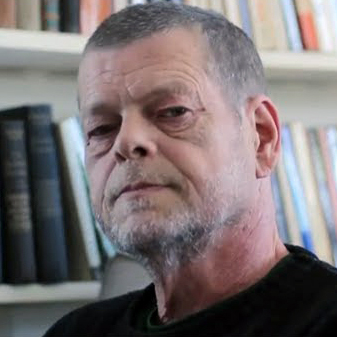 Professor of Philosophy, Emeritus
[email protected]
Daniel Berthold
Professor of Philosophy, Emeritus
[email protected]
Academic Program Affiliation(s): Environmental Studies, French Studies, Gender and Sexuality Studies, German Studies, Theology
Area of Specialization: 19th- and 20th-century continental philosophy, phenomenology and existentialism, environmental ethics, medical ethics, feminist philosophy
Biography: B.A., M.A., Johns Hopkins University; Ph.D., Yale University. Specialization in continental philosophy, existentialism, phenomenology, Freud, and environmental ethics. Author of Hegel’s Grand Synthesis, Hegel’s Theory of Madness, and The Ethics of Authorship: Communication, Seduction, and Death in Hegel and Kierkegaard. Articles and reviews in journals including Clio, Environmental Ethics, History and Theory, History of Philosophy Quarterly, Human Ecology Review, Idealistic Studies, International Journal for Philosophy of Religion, International Philosophical Quarterly, International Studies in Philosophy, Journal of European Studies, Journal of Speculative Philosophy, Ludus Vitalis, Man and World, Nous, Metaphilosophy, Modern Language Notes, Philosophy and Literature, Philosophy, Psychiatry & Psychology, Religious Studies, Review of Metaphysics, Social Theory and Practice, and Southern Journal of Philosophy. Contributor to The Dictionary of Existentialism. Editorial board, Topoi Library. Advisory Council, Hastings Center Program in Ethics, Science, and the Environment. At Bard since 1984. -
Affiliated Faculty
- Roger Berkowitz
- Seth Halvorson
- Michelle Hoffman
- Jim Keller
- Robert Weston
- Archie Magno






